Saturday, July 21, 2018

Three and a Half Stars for Three Billboards

Movie Reviewed: Three Billboards Outside of Ebbing, Missouri

Director: Martin McDonagh

Date: 21 July 2018

jamesintexas rating: ***1/2

Image result for imagery Three Billboards Outside of Ebbing, Missouri film

A rough, profane trip through the heart of darkness in Missouri, Irish playwright and filmmaker Martin McDonagh crafts Three Billboards Outside of Ebbing, Missouri with a fever-pitch, volcanic performances, and a surprisingly touching ending.  The film has stayed with me much longer than I thought it would, and I'm eager to see it a second time. 

Francis McDormand is the vengeful Mildred Hayes, a grieving mother whose daughter's heinous death inculcates a fierce desire to see justice meted out in their small town.  Mildred rents three billboards, posing explosively accusatory questions at Chief Willoughby (Woody Harrelson) for not solving the crime yet.  The seemingly incompetent, bumbling, near-caricature of stupidity and racism enshrined all in one character is Officer Dixon (Sam Rockwell), a would-be opponent of Mildred's, and a kind of institutional obstacle in his cluelessness, his insouciance, and his white male prerogative and privilege in a small town, codified by his power as the police.  Mildred's provocative act spurs his even more provocative acts of violence and abuse, events that pit much of the town against Mildred's myopic pursuit of justice, a pursuit that estranges her from her son Robbie (Lucas Hedges), her ex-husband (John Hawkes), various townspeople including her dentist, while attracting James (Peter Dinklage).  It is an assemblage so remarkably strange, but it works for the most part because of the profane poetry spewed by Mildred and others in a sort of backwoods Shakespearean vernacular of pain, viciousness, and shock.  And Mildred's histrionic media-grabbing billboards push the case forward into unforseen places. 

All the performances are stellar.  McDormand and Rockwell are the stars and the Oscar-winners, but Harrelson is dependably, solidly the core of the film with his much-maligned Chief Willoughby containing depths and surprises.  There's one particularly Mildred memorable monologue about culpability delivered with venom by McDormand to the local Catholic priest who has come to persuade Mildred to take down her billboards.  Her point is "You joined the gang. You're culpable" when dissecting priest sexual abuse scandals.  Another turn, late in the film, is surprising in its scope and its bringing us out from the microcosm to the macrocosm of war, American foreign policy, and those whom we ask to fight our wars.  It is breathtaking when it arrives and consumes the remainder of the film.

The ending of the film suggests hope for its travelers, hope (maybe) for America in 2018, as unlikely allies find ourselves full of fire and fury, dangerous but simultaneously aware that we need time to talk and think ourselves out of actions that may destroy our souls.  Maybe.  In a film swirling with police brutality, darkest violence, and Cormac McCarthy-level nihilism, that's the best that we can hope for, the best that we can get.


Image result for imagery Three Billboards Outside of Ebbing, Missouri film

Del Toro's Majesty and Grandeur: The (Odd) Shape of Water

Movie Reviewed: The Shape of Water

Director: Guillermo Del Toro

Date: 21 July 2018

jamesintexas rating: ***

Image result for imagery The Shape of Water film

Guillermo Del Toro's The Shape of Water has an assured quality in its storytelling, a loving hand which offers homages to The Creature from the Black Lagoon and other touchstones of Del Toro's cinematic life, and its weird assortment of creatures, human and non, make it one of the most unusual films of the year.  It did not move me, and writing about it in July after it won Best Picture means that the film has taken on a life of its own.  It is a phenomena of creativity.

Mute janitor Elisa Esposito (Sally Hawkins) works alongside Zelda Fuller (Octavia Spencer) in a secret 1960's lab run by autocrat Richard Strickland (Michael Shannon), and one night after seeing a bloodied Strickland emerge sans fingers from the lab, Elisa begins to communicate with the creature that is kept chained up in a pool, the remover of those fingers, an amphibious gilled-creature (Doug Jones).  Elisa starts a burgeoning friendship with the creature, and she begins to fantasize about rescuing him from his torture at the hands of the government, including Dr. Robert Hoffstetler (Michael Stuhlbarg) who offers a more humane way to treat him opposed to Strickland's ferocity.  To do anything of this magnitude, Elisa would need help from her artistic neighbor Giles (Richard Jenkins), himself an outcast of sorts because of his hidden sexuality. Strickland's harassment of Elisa in addition to his authoritarian control over the creature and the lab lead to an inevitable showdown of sorts. The film is about being outcast because of ability, race, sexual orientation, and even politics, and Del Toro lovingly shoots it with attention to the blues and yellows of neon, the windows on the bus Elisa takes to work where she traces the raindrops.

The film works best with Hawkins and Jones marvelously playing off of each other, or Hawkins and Spencer, or Hawkins and Jenkins.  Sally Hawkins really shines, making Elisa a compelling and dramatic figure.  What troubled me was so much time spent by Del Toro on and with Strickland.  Michael Shannon is a fine actor giving a fine performance, yet the amount of screen time given to him in the second half of the film undercuts the power of Hawkins and Jones.  And, it does not lead to any greater understanding of him, any epiphany, or any denouement that seems worthy of the amount of time spent with him.  Del Toro is sure to include scenes of Strickland's viciousness and also his insecurity with his superiors, especially with him being a veteran.  I guess that I just don't think the shape of the script matches the grandeur of Del Toro's images.  But to see the creature watching a film in the old-fashioned style of theater with water dripping from Elisa's underwater apartment above is a special moment.  What an odd choice of film to be enshrined forever in the public consciousness as a Best Picture!  I think I would always prefer Pan's Labyrinth over this film, but Del Toro delivers his own unique vision in his own unique way.

Image result for imagery The Shape of Water film


Alienated: Alien Disappointment

Movie Reviewed: Alien: Covenant

Director: Ridley Scott

Date: 29 June 2017

jamesintexas rating: **

Image result for imagery Alien Covenant film

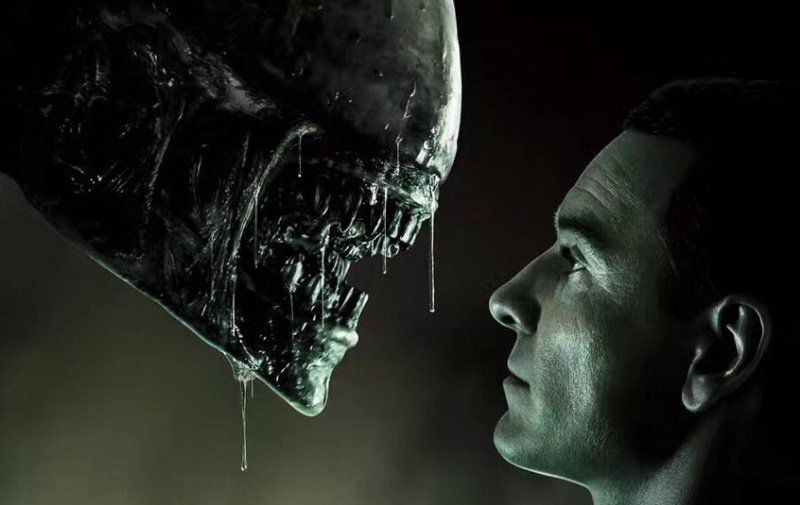
I think an Alien film will always get me in the theater door because of my unqualified love for the first two films and even my nostalgia for the darkness of the third film.  I was a Prometheus apologist, and now, I'm turning on the franchise.  Despite an interesting prologue conversation between David (Michael Fassbender) and Peter Weyland (Guy Pearce) about the nature of humanity, the film swerves into expected territory, with a damaged colony ship full of couples needing to make a quick decision about continuing their on their mission or stopping at this perfectly normal hospitable planet which is really close by.  What could go wrong, eh?  The exploration of the unfamiliar place leads to the sniffing of germs that lead to infection that lead to alien infestation, naturally, and then the film goes really off the rails.  Characters make very nonsensical decisions that lead to greater chaos and bloodshed, and despite a Fassbender tour-de-force moment that is one to savor, the film just seems to be comfortable in its complacency.  Katherine Waterston, Danny McBride, and Billy Crudup cannot save this film, which just does not seem to work very well.  I think Alien: Covenant misfires, ultimately.


Powerful Panther Power

Movie Reviewed: Black Panther

Director: Ryan Coogler

Date: 20 June 2018

jamesintexas rating: ***1/2


Ryan Coogler's Black Panther is a marvel, dramatically rendered in textures and special effects that enhance the storytelling.  He's out-Star Wars-ed Star Wars this year, and his film fits with his previous two films Creed and Fruitvale Station in their strong casts and well-developed character arcs.  Here, Coogler explores the hidden African country of Wakanda, led by T'Challa, aka Black Panther, (Chadwick Boseman) and the much more captivating and interesting warriors Nakia (Lupita Nyong'o) and Okoye (Danai Gurira), as well as sister Shuri (Letitia Wright).  The film's prologue in Oakland features a contrast of styles in how to confront injustice in the modern world with some devastating consequences of choices made by leaders that may not be fully felt for many years.

Coogler's steady hand leads us to London, where Erik Killmonger (Michel B. Jordan) espouses a philosophical reclamation of tribal artifacts and African history from the London Museum before leading an actual reclamation of a vibranium axe, the element being an integral part of the technology that makes Wakanda so strong.  Killmonger works with Ulysses Klaue (Andy Serkis, sans CGI) but has his own personal reasons for challenging T'Challa.  There's also the sleuthing of Nakia and T'Challa, as they try to figure out the next moves of Killmonger and Klaue. The teaming-up-with-the-CIA part of the film is probably its weakest aspect, even though Martin Freeman does as much as he can. There's much to like here from the elaborately conceived and majestically purple-colored dream sequences where T'Challa communicates with his elders, as well as the ritual combat set against thunderous waterfalls and edges.  Coogler handles the intensity of this world by giving us so many characters to care about, with Nakia, Okoye, and Shuri leading the way.

Chadwick Boseman's work is more subdued in contrast and less interesting.  Nyong'o, Gurira, and Wright are given much to do, humor, and significant screen time.  Alan Hook's art direction, Ruth Carter's costumes, and Jay Hart's set decoration should all be remembered come Oscar season.  The film really looks original and unique, and though I've fallen off the Marvel bandwagon and am many, many movies behind, Black Panther succeeds as a stand alone film because of Coogler's confident streamlining of the story and rooting it in characters that we care about.  For my eyes, the final fight sequence with T'Challa and Killmonger loses its power in CGI muddled imagery, with the final moves that end the fight being hard to follow. But in nearly every other respect, Black Panther is one of the best films of the year.  The film ends back in Oakland with a philosophical unpacking of isolationism vs. globalism, the idea of sharing, not hoarding what you have that makes you special, exploring elements of social consciousness in a film far more interested in ideas and characters than in the superficial.  Bravo!


Wanted: More LeCarre Films

Movie Reviewed: A Most Wanted Man

Director: Anton Corbjin

Date: 29 June 2017

jamesintexas rating: ***1/2

Image result for imagery A Most Wanted Man

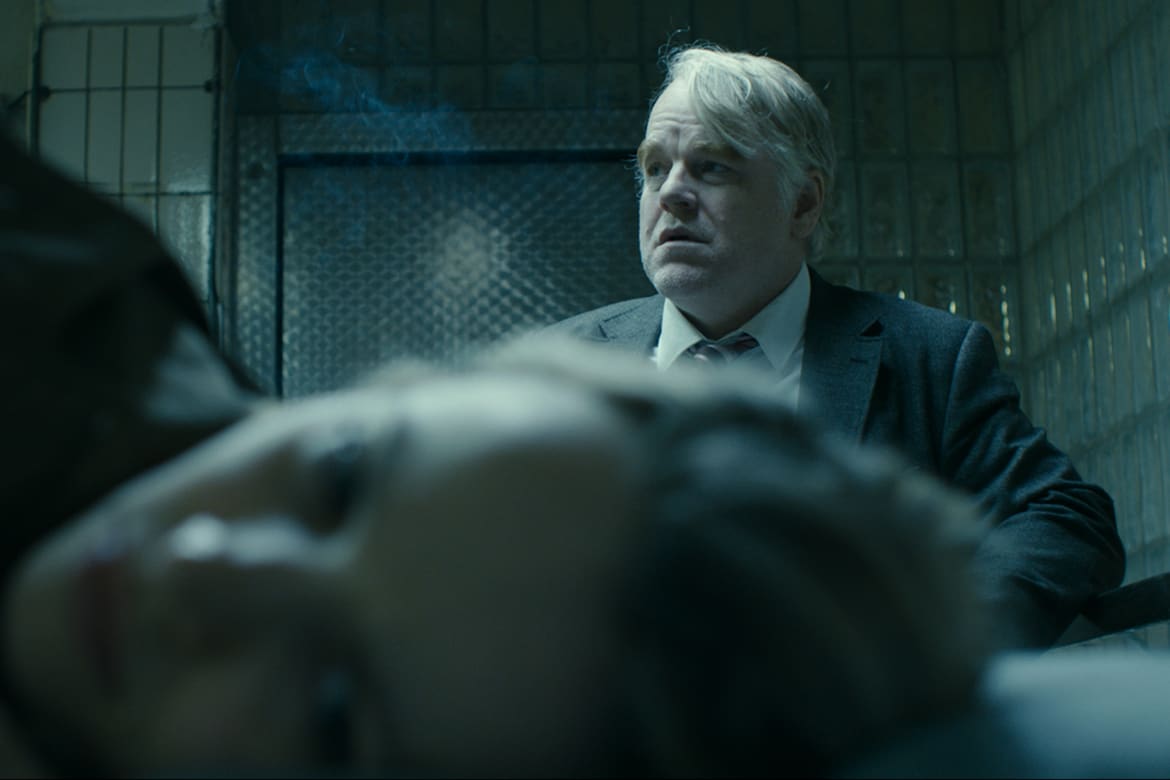
My memory of this film is that it is world-weary, heavy, thick with plot and character, and it is the kind of thing that is right up my alley.  James Bond-esque, but then decidedly not very James Bond-esque, A Most Wanted Man features one of Philip Seymour Hoffman's last performances, and he is just great here.  Based on a John le Carre novel, which means to me that it will feature the less glamorous but fully essential minutia of spycraft, Gunther (Hoffman), the head of German spying in Hamburg, finds himself close to locating and bringing in Chechan immigrant Issa Karpov (Grigoriy Dobrygin) who would be a key asset in the War on Terror.  The swirling politics and geopolitics surrounding capturing Karpov and what he represents gives glimpses into both refugee advocacy and activism and cutthroat, utilitarian politicians, represented by both Rachel McAdams and Robin Wright.  As a fan of this genre in film and in literature, A Most Wanted Man did not disappoint in its thoughtfulness, its calibration of storytelling, and its explosive ending with its vertiginous powerlessness.  Hoffman's work here is spectacular, and his choices reveal Gunther to be both haunted and idealistic, and damned either way because of forces greater than he can fathom.


Wednesday, June 20, 2018

Scary, Naturally: Hereditary's Horror.

Movie Reviewed: Hereditary

Director: Ari Aster

Date: 11 June 2018

jamesintexas rating: ***

Image result for Hereditary movie images

In my inaugural trip to an Alamo Drafthouse Movie Theater (and in Kansas City with my brother Danny, NOT Texas), I experienced the traumatic, unnerving new film Hereditary, and I have to report that it is a deeply, deeply upsetting film that wears its influences (The Shining paramount among them) firmly on its sleeve in its pursuit of serious, adult, wince-inducing horror and suspense.  It is a wicked ride, albeit one that I do not fully understand.

A review of this sorts needs to keep much of the plot a mystery, and I will say this: the less you know about this film, the better it is.  Annie (Toni Collette) is a miniatures artist who lives with her husband Steve (Gabriel Byrne) in the forested mountains of Utah along with their two children, Peter (Alex Wolff) and Charlie (Milly Shapiro).  And until recently, Annie's mother lived with them, and her death is the catalyst for much of what is to follow.  The house is all wooden corners and high ceilings, pull-down attics and intricate tiny spaces in Annie's workshop.  Asher's sequencing of the film involves slow zoom-in close ups of those houses and recreations of scenes in Annie's life, and often we are so disoriented by them, it is difficult to tell if they are establishing shots of the house or of the miniature.  That disorientation continues as Annie unfolds her grief for her mother, whom she was not close with and harbored deep resentments with about the raising of her children.  Peter wanders the early portions of the film as a mildly disaffected teen, staring off in History class, eager to get to a party to meet the girl.  Charlie seems to have inherited her mother's penchant for art, and she's jarring in her wandering off and sourcing of material for her art, as well as her tic of "clock-ing" with her mouth.  I don't know a better word for it.  There's a show deadline looming in six months or so, but with the painstaking work that Annie does, her grief interferes and disrupts, sleep provides no respite, and a local mourning group allows her the chance to vent but does not provide relief.  The insular world of the miniatures just seems to heighten everything, particularly in the camera's casual gazing at Annie's renderings of traumatic moments in their family history.  Steadily and surely, things fall apart.

Toni Collette is a force of nature, and her work here is extraordinary, full of range and intensity.  My first movie memory of her is The Sixth Sense, a high watermark of acting in my opinion as Lynn Sear, and I haven't seen her in something that showcases her talents in quite this way.  She's the centerpiece of this disturbing film, in most every scene, and she carries it fully.  The film is disquieting, which means that I had to keep looking over at Danny multiple times, in a "Can you believe this?" kind of way.  The shocks are not big jump scares but more of revelations, slow builds, something that is in the frame already, and you just need to realize its power.  The film's lingering themes are of family and religion's pernicious influences, as seen through the lens of the title.  Hereditary: genetic factors and often diseases beyond our control.  In a film that is willing to offer its dark vision in a summer of superheroes and fantasy, Ari Aster has crafted something worth seeing and being upset by, though I do not believe it lives up to its The Shining-level pretensions or aspirations.  Still, the cast and in particular, cinematographer Pawel Pogorzelski, do a terrific job of providing luster to this tale. 

Image result for Hereditary movie images


Friday, June 15, 2018

Semi-Incredible!

Movie Reviewed: Incredibles 2.

Director: Brad Bird

Date: 8 June 2018

jamesintexas rating: ***

Image result for Incredibles 2 images

Pixar has its formulas, and tried and true, they deliver an entertaining, rollicking ride in Incredibles 2, a film that I found quite fun if not as inventive or memorable as its predecessor.  We've been watching that first film a bunch in our home in anticipation of this one, and from its stunning art design (Art Deco, early 1960's fashion, fun angles) to its soaring Michael Giacchino score, it moves with energy and humor simultaneously as a super-family emerges from hiding, mostly playing on the dynamic between Bob/Mr. Incredible (Craig T. Nelson) and Helen/Elastigirl (Holly Hunter) who wrestle with middle age and family responsibilities as much as the mighty villain Syndrome.

Here, the story picks up at a police station interview, unpacking the scene that ended the previous film through the lens of  witness Tony Rydinger (Michael Bird).  Jack-Jack (Eli Fucile) monitoring Violet (Sarah Vowell) removed her mask momentarily and was spotted by HS classmate Tony, while Dash (Huck Milner) ran crowd control for the parents who unsuccessfully try to stop The Underminer (John Ratzenberger), resulting in major damage for the city and city hall, terrible press for the Supers, and the shutting down of their program.  Frozone (Samuel L. Jackson) at least has the sense to leave before the party ends, as he puts it, but their existence is threatened until stylishly-named mysterious millionaire Winston Deavor (Bob Odenkirk) and Evelynn Deavor (Catherine Keener) invite The Supers to help them reassert the role of superheroes on the planet, in part to right a tragic wrong from their childhood.  The film hinges on Helen being the one they want to focus on with the positive media attention; Evelynn's cost-benefits analyses prove more beneficial for her than for the destructive Mr. Incredible.  So, he takes on the domestic front, meaning lots of time with Jack-Jack, Dash's New Math, and Violet's embarrassment of being seen with him, all set within a stylist mid-century modern mansion, like something out of Alfred Hitchcock's North By Northwest.  Elastigirl finds herself drawn further and further into the mystery of a masked criminal who is terrorizing the city, and a dazzling train rescue which would rival James Bond's best on a motorcycle sequence leads to more and more clues and uncertainty.  The story lines are separate between the home front and the family front, and though the dramatic tension is not as strong as the previous film, we get lots of fun sequences: Jack-Jack vs. his neighborhood backyard nemesis; Edna (Brad Bird) and her marvelous reappearance, stealing the film; a wonderful Bond-esque Incredi-mobile that needs to be reacquired.  There's a big deal giant fight scene at the end, of course.

So, what gives?  The voice work delivers great performances, especially from Hunter, who is a national treasure.  Frozone gets a little bit more to do.  There are some fun, nice supporting new characters.  But, overall, the film has a by-the-numbers feel to it, and is overall less special than its original partially because of the less than incredible villainy.  The indulgences of playing up sequences and characters that work (Jack-Jack, Edna) cover up the ones who lack development or just anything to do (Violet and Dash).  The animation is truly incredible, naturally, and it is astounding to see how far the art from has come in just fourteen years.  The fourteen years in between signifies to me that there wasn't a need or a narrative drive to re-establish this universe beyond fun (and oodles of box office cash).  I won't lie: sitting next to Gus-Gus and watching Jack-Jack, cackling with glee, the film hits all of its marks.  Liking Finding Dory before it, Incredibles 2 is superfluous and fine.  You could spend your time (and money) in many worse ways.  So, that's not a ringing endorsement, but as a summer movie, enjoyable with little ones, Incredibles 2 does the job.

Image result for incredibles 2 images